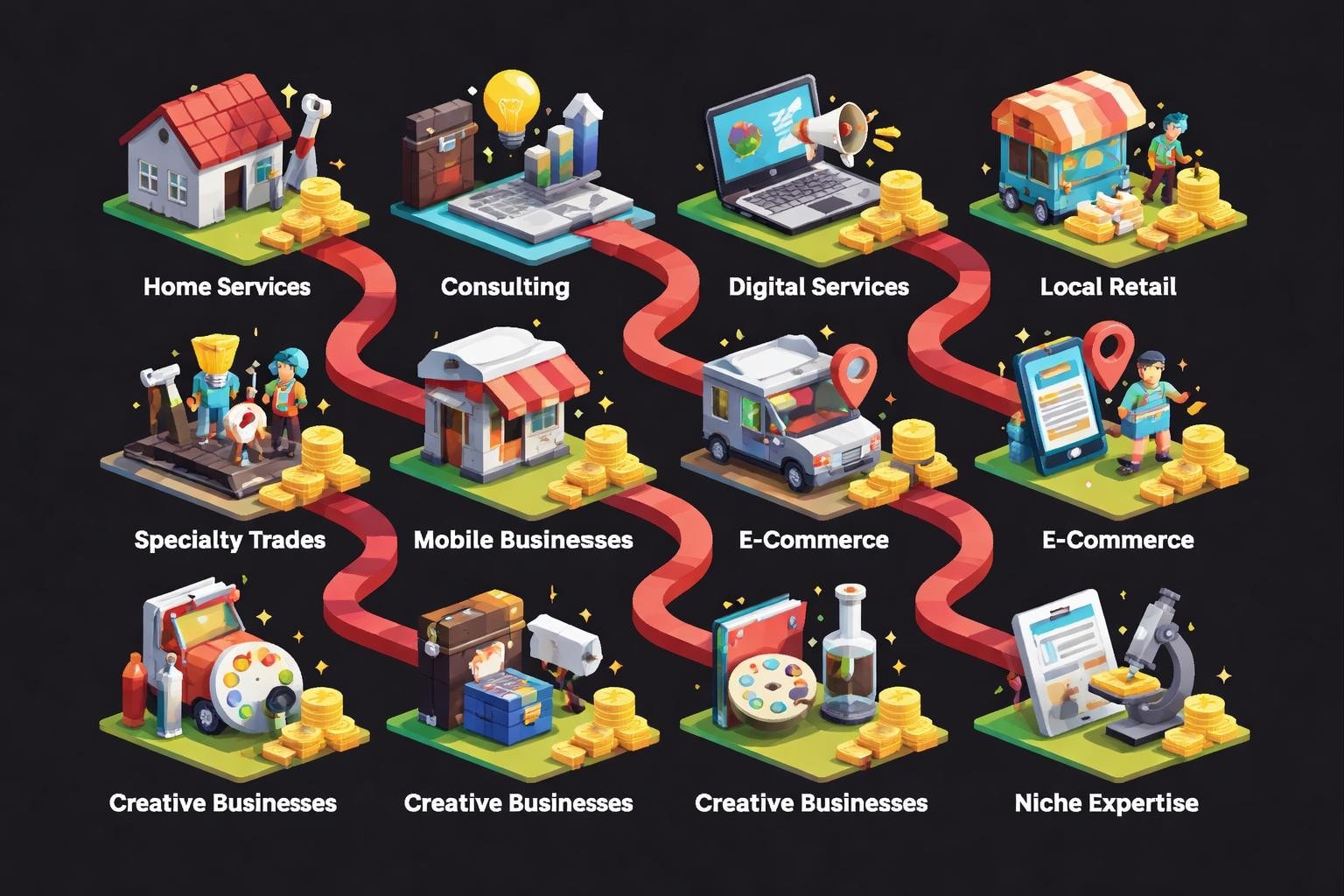
Starting a business in 2026 means cutting through the noise. You don’t need another motivational speech or a guru promising six figures in six weeks. What you need are practical, proven 10 small business ideas that work in the real world, backed by actual market demand and realistic execution plans. This guide focuses on opportunities that solve real problems, serve established markets, and can be launched without betting the farm. Whether you’re leaving corporate America, expanding from a side hustle, or finally making the leap after years of thinking about it, these options provide clear paths forward without the typical fantasy.
Home Services: The Unsexy Gold Mine
Home services businesses remain among the most reliable 10 small business ideas because they solve problems people can’t ignore. When your roof leaks or your AC dies in July, you’re calling someone immediately. These businesses thrive on necessity, not trends.
HVAC Maintenance and Repair
The HVAC industry generated over $28 billion in revenue in 2025, and demand continues climbing as climate patterns shift and equipment ages. Starting an HVAC business requires proper licensing and certification, but the barrier to entry creates less competition than industries anyone can enter with a laptop.
Initial investment typically ranges from $15,000 to $50,000, covering tools, vehicle upgrades, licensing, and initial marketing. The real competitive advantage comes from reliability and response time, not just technical skill.
Key success factors:
- Proper licensing and bonding from day one
- Service contracts that create recurring revenue
- Emergency availability that commands premium pricing
- Local SEO optimization for “near me” searches

Residential Cleaning Services
Cleaning businesses represent one of the most accessible 10 small business ideas with low startup costs and immediate market demand. You can launch with under $500 in supplies and build from there.
The residential cleaning market exceeds $15 billion annually in the United States. Success comes from systems, not hustle. The owners who scale focus on standardized processes, consistent quality control, and team development rather than doing all the work themselves.
| Startup Element | Cost Range | ROI Timeline |
|---|---|---|
| Initial supplies and equipment | $300-$1,000 | Immediate |
| Bonding and insurance | $500-$1,500/year | Risk mitigation |
| Marketing (local ads, website) | $200-$1,000 | 30-90 days |
| Vehicle signage | $200-$800 | Ongoing |
According to guidance from the U.S. Small Business Administration, creating detailed financial projections helps prevent the cash flow problems that kill most service businesses in their first year.
Professional Services: Selling Expertise
Professional service businesses leverage specialized knowledge to solve complex problems. These are among the smartest 10 small business ideas for people with deep industry experience who can translate that knowledge into billable solutions.
Business Consulting for Niche Industries
The consulting market is oversaturated with generalists. The opportunity exists for specialists who understand specific industries deeply. A former manufacturing plant manager can consult on lean operations. A healthcare administrator can help medical practices improve billing and patient flow.
The startup costs are minimal: a website, basic CRM, and professional liability insurance. The real investment is positioning yourself as the go-to expert rather than another coach with a certification.
Successful consultants focus on measurable outcomes. They don’t sell workshops about mindset. They fix broken processes and show the financial impact in spreadsheets.
Bookkeeping and Financial Services
Small businesses need clean books, but most owners hate dealing with numbers. This creates consistent demand for bookkeeping services that handle monthly reconciliation, payroll, and financial reporting.
Modern bookkeeping businesses leverage software like QuickBooks Online, making it possible to serve clients remotely and scale beyond local geography. The combination of essential service plus recurring monthly revenue makes this one of the most stable 10 small business ideas.
- Monthly retainer fees range from $300 to $2,000 per client
- One person can typically manage 15-25 clients effectively
- Adding tax preparation services increases annual revenue per client
- Remote work capability eliminates geographic limitations
Digital Services: Location-Independent Income
Digital service businesses offer location flexibility and low overhead. These 10 small business ideas work whether you’re in Manhattan or rural Montana, as long as you have reliable internet and actual skills to deliver.
Social Media Management for Local Businesses
Local businesses know they need social media presence but lack time and expertise to do it well. This creates opportunity for social media managers who understand platform algorithms, content creation, and local market dynamics.
The barrier isn’t technical skill. Anyone can post to Instagram. The value comes from strategy: understanding what content drives local foot traffic, how to run profitable ad campaigns, and which metrics actually matter for a plumbing company versus a restaurant.
Charge $500 to $2,500 per month per client depending on scope. Focus on industries with clear ROI metrics rather than vanity followers.
Website Development and Maintenance
Every business needs a website, but most hate dealing with updates, security, and technical issues. Website maintenance services create recurring revenue by handling the ongoing work after the initial site launch.
This works best when specialized: focus on dental practices, law firms, or home service companies rather than trying to serve everyone. Industry specialization allows you to create templates, streamline processes, and charge premium rates for expertise.

Health and Wellness: Meeting Growing Demand
The health and wellness sector continues expanding as demographics shift and people prioritize preventive care. These 10 small business ideas require proper credentials but offer strong growth potential in established markets.
Mobile IV Therapy Services
Mobile IV therapy businesses serve both wellness clients and medical patients requiring hydration therapy, vitamin infusions, and post-operative recovery support. This business requires licensed nurses or paramedics, proper medical protocols, and liability coverage.
Startup costs range from $10,000 to $30,000, covering medical supplies, portable equipment, licensing, insurance, and initial marketing. Revenue potential runs $200 to $400 per session with proper positioning.
The key differentiator is professionalism and medical credibility, not wellness marketing hype. Focus on serving medical needs and recovery support rather than chasing wellness trends.
Personal Training and Fitness Coaching
The fitness industry shifted dramatically during 2020-2021, with virtual training and small group sessions replacing large gym models. Personal trainers who offer hybrid services (both in-person and virtual) can serve local clients while expanding reach nationally.
Success requires more than certification. The trainers who build sustainable businesses focus on client results, accountability systems, and program progression rather than just showing up for sessions.
Revenue streams to develop:
- One-on-one training sessions ($60-$150 per hour)
- Small group training (4-8 clients at $30-$50 each)
- Online programming and check-ins ($100-$300 per month)
- Corporate wellness contracts (recurring revenue)
When starting any small business, understanding your startup costs and creating realistic revenue projections prevents the cash flow crises that sink most new ventures in their first 18 months.
Food and Beverage: Proven Models That Scale
Food businesses face unique challenges with inventory, regulations, and slim margins. These 10 small business ideas represent models with proven economics and realistic scaling potential beyond the startup phase.
Food Truck or Mobile Catering
Food trucks offer lower startup costs than traditional restaurants while testing concepts and building customer bases. Initial investment typically runs $50,000 to $150,000 depending on equipment, vehicle condition, and local permit requirements.
The successful operators treat this as a real business, not a hobby. They track food costs weekly, optimize menus for margin and preparation speed, and choose locations based on data rather than guesses.
| Success Metric | Target Range | Why It Matters |
|---|---|---|
| Food cost percentage | 28-35% | Determines menu profitability |
| Labor cost percentage | 25-35% | Controls operational efficiency |
| Average ticket size | $12-18 | Impacts revenue per customer |
| Daily transaction count | 75-150 | Indicates location effectiveness |
Specialty Coffee Shop or Cafe
Coffee shops work in the right locations with the right positioning. The failures come from poor site selection, weak unit economics, and treating it as a lifestyle business rather than a profit-generating operation.
Successful coffee shops focus on high-traffic locations, optimized labor scheduling, and multiple revenue streams: morning coffee, lunch service, afternoon snacks, and retail product sales. The average startup cost ranges from $80,000 to $250,000 depending on location and build-out requirements.
The path to profitability runs through ruthless operational efficiency, not just great espresso and aesthetic Instagram posts.
E-commerce and Retail: Selling Physical Products
E-commerce businesses continue growing, but success requires more than uploading products to Shopify. These 10 small business ideas focus on sustainable models rather than drop-shipping schemes.
Niche Product Retail (Online or Storefront)
Niche retail works when you serve a specific customer segment better than general retailers. A store specializing in equipment for competitive swimmers, supplies for home brewing, or gear for mountain biking serves defined audiences willing to pay for expertise and specialized inventory.
The e-commerce version requires less capital than physical retail but demands expertise in digital marketing, SEO, and customer acquisition. Physical retail succeeds in locations where your niche audience already congregates.
Both models require inventory management skills, supplier relationships, and realistic margin calculations. Most new retailers fail because they don’t understand their actual costs including shipping, returns, payment processing, and customer acquisition.

Amazon FBA Business
Fulfillment by Amazon (FBA) businesses source products from manufacturers and sell through Amazon’s marketplace while leveraging their fulfillment network. This model requires less operational complexity than managing your own e-commerce site and fulfillment.
Initial investment typically ranges from $5,000 to $25,000 for inventory, product research tools, and initial marketing. Success depends on product selection, understanding Amazon’s algorithm, and managing inventory cash flow.
The businesses that scale focus on private label products with defensible positioning rather than competing on identical products where price is the only differentiator. For entrepreneurs exploring various business ideas and opportunities, understanding the full operational reality prevents expensive mistakes.
Education and Training: Teaching Specialized Skills
Education businesses monetize expertise by teaching others. These 10 small business ideas work best when you have genuine specialized knowledge and can deliver measurable skill improvement rather than motivational content.
Trade Skills Training Programs
Skilled trades face significant worker shortages across electrical, plumbing, welding, and HVAC sectors. Training programs that prepare people for apprenticeships or entry-level positions serve both students seeking career changes and contractors needing qualified workers.
These businesses require proper facilities, licensed instructors, and often accreditation or certification partnerships. Startup costs run higher than purely digital businesses but create barriers to competition.
Revenue comes from tuition, equipment sales, and potentially placement fees from contractors hiring your graduates. The successful programs focus on actual job placement rates rather than just enrollment numbers.
Online Course Creation in Professional Skills
Online courses work when teaching hard skills with clear applications: software training, specific business processes, technical skills, or professional certifications. The market is saturated with courses about making money online or generic personal development.
The sustainable model involves selling to businesses for employee training rather than individual consumers. A course teaching medical billing specialists how to process complex insurance claims has clearer value than another course about productivity.
Build the course around outcomes you can demonstrate, not just information you can share. Price based on the economic value of the skill, not arbitrary course pricing formulas from internet marketers.
Creative Services: Monetizing Creative Skills
Creative service businesses succeed when they solve business problems rather than just creating art. These 10 small business ideas focus on commercial applications of creative skills.
Video Production for Business Marketing
Businesses need video content for websites, social media, training, and marketing campaigns. Video production services that understand business objectives and marketing strategy deliver more value than technicians who just know camera settings.
Startup costs range from $5,000 to $20,000 for professional equipment, editing software, and initial marketing. The businesses that scale build packages around common needs: website videos, testimonial interviews, social media content series, or training video production.
Charge for the business value delivered, not just production time. A video that generates leads is worth more than one that just looks pretty.
Graphic Design and Brand Development
Every business needs design work: logos, marketing materials, website graphics, and packaging. Freelance designers who position themselves as brand strategists rather than just production artists command higher rates and better clients.
The low barrier to entry creates intense competition. Differentiation comes from specialization: focus on restaurant branding, healthcare marketing materials, or product packaging rather than serving everyone.
Successful design businesses create systems for common deliverables, allowing consistent quality while improving profitability per project. Template-based approaches for initial concepts speed up workflow without sacrificing customization.
What Actually Makes These Ideas Work
None of these 10 small business ideas succeed automatically. The difference between profitable businesses and expensive hobbies comes down to execution fundamentals that most people skip.
Critical execution factors:
- Actual market research before spending money on setup
- Realistic financial projections including all costs
- Systems for consistent service delivery
- Marketing that reaches your specific target customer
- Metrics tracking that shows what’s working and what’s not
The businesses that scale share common characteristics: founders who focus on solving customer problems profitably, systems that work without the owner doing everything, and realistic growth expectations based on unit economics rather than hockey stick fantasies.
When exploring these opportunities, launching your business properly means handling legal structure, permits, insurance, and financial systems before worrying about logo colors or office furniture.
The Reality Check Nobody Wants to Hear
Most small business advice treats every idea as equally viable and every founder as equally prepared. That’s nonsense designed to sell courses, not build businesses.
These 10 small business ideas work, but not for everyone. Your background, skills, capital, and local market all determine which opportunities make sense for you specifically. A former HVAC technician has massive advantages starting an HVAC business that a marketing consultant doesn’t have. A CPA can launch bookkeeping services faster than someone who needs to learn accounting first.
The successful approach involves honest assessment of your actual capabilities and resources, not just chasing whatever seems exciting or trendy. For business owners in specific regions, understanding local requirements and resources prevents delays and compliance issues that drain cash and momentum.
Picking Your Path Forward
The best small business idea for you isn’t the most profitable on paper. It’s the one that matches your skills, interests, available capital, and local market while solving real problems people will pay to fix.
Start by identifying problems you’re uniquely qualified to solve based on your experience, industry knowledge, or specialized skills. Then validate that enough people in your market will pay enough to make the economics work. Finally, build the minimum viable version and test with real customers before investing in the full buildout.
Skip the business plan competitions and pitch decks. Focus on getting the first paying customer, delivering exceptional results, and building systems to repeat that process profitably. Everything else is distraction.
The businesses that succeed in 2026 and beyond won’t be the ones with the best Instagram presence or the most inspiring founder story. They’ll be the ones that solve real problems, deliver consistent value, and build sustainable economics. These 10 small business ideas provide proven paths, but execution determines everything.
These 10 small business ideas offer real paths to profitability when executed with honest planning and operational discipline. The difference between success and expensive failure comes down to systems, accountability, and facing reality instead of chasing fantasies. If you’re ready to build a business that actually works instead of just talking about it, Accountability Now provides the tactical coaching and operational support to turn these ideas into profitable reality without the guru nonsense or long-term contracts.