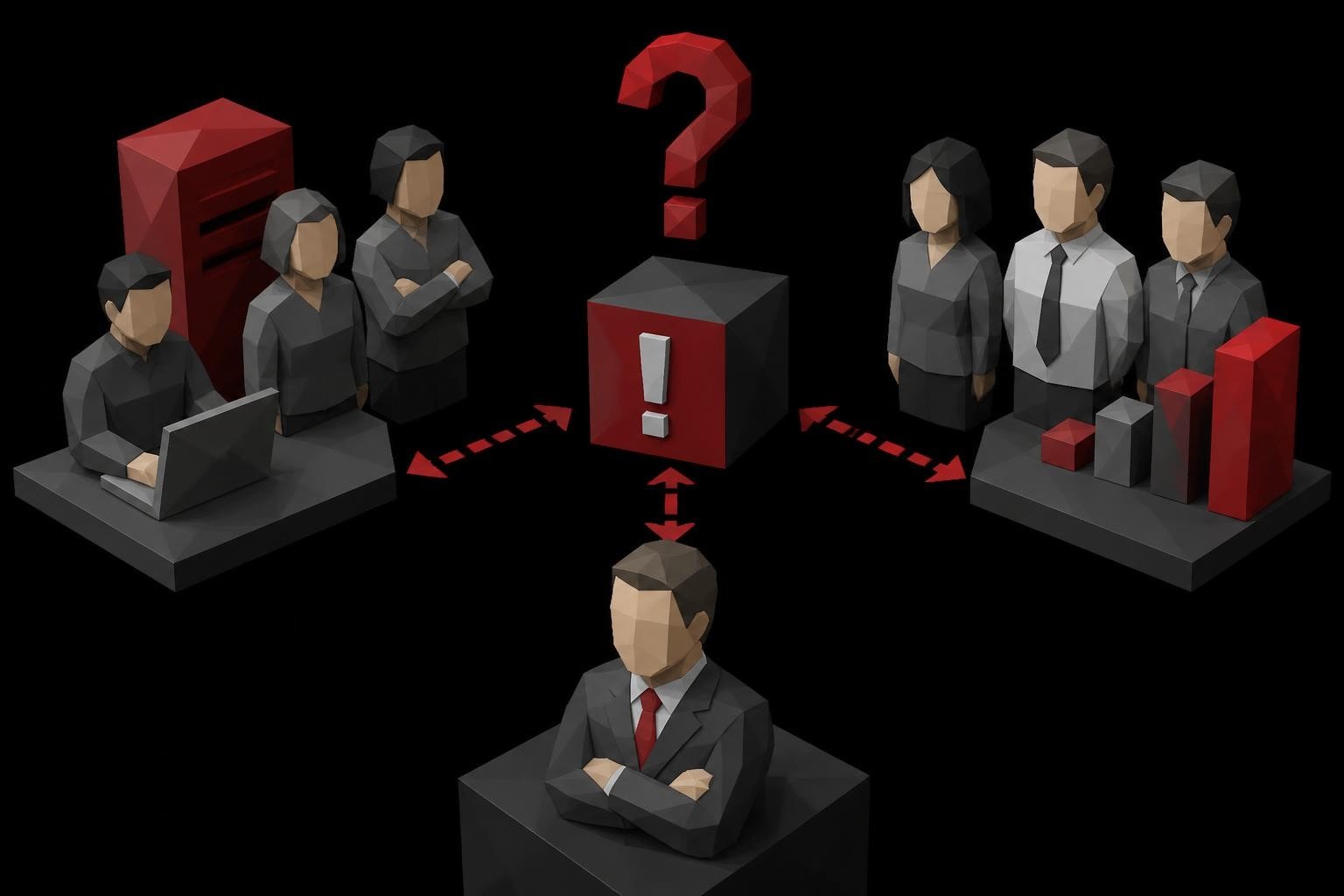
Economic pressure tests leadership teams in ways comfortable markets never will. Growth hides dysfunction. Expansion masks incompetence. Tight margins and revenue drops expose everything you've been ignoring. I've watched hundreds of businesses face economic headwinds since 2008. The survivors had one thing in common: their leadership teams made hard decisions fast, owned their mistakes, and didn't hide behind excuses. The casualties talked about their vision while revenue disappeared. In 2026, we're seeing business owners who rode the 2020-2023 boom suddenly facing reality. Interest rates matter again. Customers care about price. Employees expect performance, not just paychecks. This separates real leaders from pretenders.
The Economic Pressure Reveals What Growth Hides
Most leadership teams look competent when revenue grows 20% annually. You can afford mediocre hires. You can tolerate waste. You can ignore broken systems because new money covers old problems.
Then economic pressure tests leadership teams by removing that cushion.
I watched a seven-figure HVAC company collapse in 2022 despite twelve straight years of growth. Their leadership team had seventeen people. Four did real work. The rest attended meetings, created reports nobody read, and justified their existence through activity instead of outcomes. When material costs jumped and new construction dried up, the owner finally saw what I'd been telling him for months: he had a bloat problem disguised as a team.
The Four Pressure Points That Expose Weak Leadership
Economic downturns don't create new problems. They expose existing ones faster than you can hide them.
Cash flow management separates amateurs from professionals immediately. Leaders who never tracked receivables suddenly discover they're funding their customers' operations. I've seen optometry practices with $200K in outstanding insurance claims because nobody owned collections. When economic pressure tests leadership teams, the ones without daily cash visibility die first.
Decision speed becomes survival-critical when margins compress. The leadership teams that survive make decisions in hours, not weeks. They cut underperforming products, fire toxic employees, and renegotiate vendor contracts before the bank account hits zero. The ones that die schedule another meeting to discuss the issue.
Accountability structures either exist or they don't. You can't build them during a crisis. I worked with a mental health group practice in 2024 that had six therapists, zero performance metrics, and a leadership team that avoided difficult conversations. When referrals dropped 40%, they discovered nobody knew who was responsible for what. Research from Gallup shows that keeping teams engaged during economic downturns requires clear expectations and consistent accountability, not motivation speeches.
Operational discipline becomes non-negotiable when you can't outspend problems. Leadership teams that never documented processes suddenly can't delegate. Owners working eighty-hour weeks discover they built a job, not a business.

What Most Experts Get Wrong About Crisis Leadership
The business coaching industry sells fairy tales about crisis leadership. Lead with empathy. Communicate your vision. Keep morale high. Focus on culture.
That's garbage advice that gets people hurt.
Economic pressure tests leadership teams on execution, not intention. Your team doesn't need another vision statement when payroll is at risk. They need a leader who makes hard calls and tells the truth.
The Vision Trap
I've watched dozens of business owners hide behind vision during downturns. They host town halls about their mission. They talk about values and purpose. Meanwhile, they avoid firing the underperformer draining $80K annually because it "doesn't feel right."
Vision matters during growth. Execution matters during contraction.
The leadership teams that survive recessions cut fast, communicate clearly, and focus on the three metrics that actually matter: revenue, expenses, and cash position. Everything else is noise.
The Empathy Excuse
Here's what nobody tells you about empathetic leadership during economic pressure: it often means lying to people about reality.
I worked with a financial advisory firm in 2025 that kept two underperforming advisors for eight months because the owner "didn't want to hurt them during tough times." The cost? $140K in salary and overhead that nearly bankrupted the firm. The two advisors eventually lost their jobs anyway, plus six other people lost theirs when the firm had to do emergency layoffs.
Real empathy means honest conversations early. Fake empathy means avoiding difficult decisions until everyone suffers.
Forbes research on leadership during recessions highlights transparency as critical, but most owners confuse transparency with pessimism and empathy with avoidance.
The Morale Myth
Economic pressure tests leadership teams by forcing a choice: protect feelings or protect the business.
You can't do both.
Morale doesn't come from pizza parties when revenue drops 30%. It comes from a leadership team that tells the truth, makes decisive moves, and shows a credible path forward. Your team wants to know the plan, not hear platitudes about "getting through this together."
I've seen roofing companies maintain high morale through brutal winters by being brutally honest: "We're cutting to four-day weeks until spring. Here's our cash position. Here's the threshold where we're profitable again. Here's how each of you contributes to getting there."
Compare that to the contractor who kept saying "everything's fine" while secretly interviewing bankruptcy attorneys. His team found out when the locks changed.
The Leadership Behaviors That Actually Matter Under Pressure
Economic pressure tests leadership teams on specific, measurable behaviors. Not personality. Not charisma. Behaviors you can observe and replicate.
Behavior One: Speed of Bad News
The best leadership teams I've worked with have a simple rule: bad news travels up immediately, good news can wait.
When a key client cancels, leadership knows within the hour. When a project goes over budget, there's a conversation that day. When an employee quits, the team discusses replacement options before lunch.
Weak leadership teams avoid bad news. They hope problems solve themselves. They wait for monthly reports to discover what everyone already knew three weeks ago.
| Leadership Quality | Survivors | Casualties |
|---|---|---|
| Bad News Speed | Same day | Same month |
| Decision Timeline | Hours to days | Weeks to months |
| Accountability Frequency | Weekly minimum | Monthly or less |
| Financial Visibility | Daily dashboard | Monthly statements |
| Performance Metrics | 3-5 key numbers | Everything or nothing |
This table isn't theory. It's pattern recognition from watching businesses survive or collapse between 2008 and 2026.
Behavior Two: Resource Reallocation
Economic pressure tests leadership teams on their willingness to move resources from comfortable to critical.
That marketing campaign that "builds brand awareness"? Cut it. That software stack costing $3K monthly that three people use? Gone. That vendor relationship you've maintained for a decade despite mediocre service and premium pricing? Renegotiated or replaced.
I audited a CPA firm in early 2026 that spent $47K annually on a practice management system that did nothing their $200/month alternative couldn't handle. The owner knew it was overpriced but "didn't want to switch during tax season." Then revenue dropped, and suddenly switching during tax season seemed less painful than laying off staff.
The leadership teams that thrive during downturns constantly ask: "If we started this business today with our current knowledge, would we spend money here?" Most of the time, the answer is no.
Behavior Three: Talent Decisions Without Sentiment
This is where most business owners fail. Economic pressure tests leadership teams on their ability to separate people they like from people who perform.
You have an employee who's been with you for eight years. Loyal. Hardworking. Expensive. Not producing results that justify their cost. What do you do?
Weak leaders keep them because "they've been here forever" and "it wouldn't be fair." Strong leaders have an honest conversation about performance, offer a defined timeline for improvement, and make a change if nothing shifts.
I watched a plumbing company keep a dispatcher for eleven years despite complaints from technicians, missed appointments, and general chaos because she "tried hard." When revenue dropped in 2025, they finally made a change. New dispatcher costs the same, zero complaints, customer satisfaction up 40% in ninety days.
The owner's response? "I should have done this five years ago."

The Financial Literacy Gap That Kills Leadership Teams
Most small business leadership teams don't understand their numbers well enough to survive economic pressure. They know revenue. They might know gross profit. Beyond that, it's guesswork and hope.
Economic pressure tests leadership teams on financial literacy before it tests anything else.
The Numbers That Actually Matter
You don't need complex financial models. You need five numbers updated weekly:
- Cash position: Actual dollars in the bank right now
- Accounts receivable aging: Who owes you money and for how long
- Accounts payable aging: Who you owe and when it's due
- Weekly revenue: Not monthly. Weekly. So you spot trends fast.
- Gross profit per service/product: What actually makes money after direct costs
That's it. Everything else is detail work.
I worked with an electrical contractor who ran a $3M business with seventeen financial reports and couldn't tell me his cash position without calling his bookkeeper. We cut it to five numbers on a single-page dashboard. Three months later, he caught a cash flow problem two weeks before it would have bounced payroll.
Small business owners facing economic pressure often struggle because they lack the financial visibility to make informed decisions quickly.
The Unit Economics Nobody Tracks
Economic pressure tests leadership teams on whether they know their unit economics. What does it cost to acquire a customer? What does it cost to deliver your service? What's your breakeven point?
Most owners guess. Some are close. Many are wildly wrong.
I audited a therapy practice in 2024 that believed they were profitable on every client. Actual analysis showed that clients paying through certain insurance networks cost more to serve than the reimbursement rate. They were losing money on 40% of their client base and didn't know it.
When revenue dropped, they initially tried to increase volume. That made it worse. Once we cut the unprofitable payer networks and focused on private pay and better-reimbursing insurance, cash flow improved despite lower client count.
You can't fix what you don't measure. Economic pressure just makes the consequences of ignorance faster and more expensive.
The Delegation Failure That Compounds During Downturns
Economic pressure tests leadership teams by exposing their inability to delegate. When revenue is growing, the owner working seventy-hour weeks looks dedicated. When revenue drops, that same owner becomes the bottleneck preventing survival.
Why Owners Can't Let Go
I've identified three reasons business owners fail to delegate, even when their business is dying:
Nobody knows how to do it like I do translates to "I never documented the process or trained anyone properly." You didn't delegate. You just complained about having to do everything.
It's faster if I just do it works until you hit capacity. Then your business caps at whatever you personally can deliver. During economic pressure, this limitation kills growth opportunities you need to survive.
I don't trust anyone else means you hired wrong or managed wrong. Probably both. The solution isn't working harder. It's hiring better and building accountability structures that make trust less relevant than verification.
The Delegation Framework That Scales
Leadership teams that survive economic pressure use a simple delegation model:
- Document the process – Written steps anyone can follow
- Assign clear ownership – One person responsible for outcomes
- Define success metrics – Numbers that prove it worked
- Set review cadence – Weekly check-ins until proven
- Remove yourself completely – If they can't do it without you, you didn't delegate
Most business owners skip steps two through five and wonder why delegation fails.
I implemented this framework with a home services company that had the owner approving every estimate over $5K. We documented the estimating process, trained three lead technicians, set approval authority at $15K, and established weekly estimate review meetings to catch problems.
Owner went from approving 40+ estimates weekly to reviewing summary data and focusing on business development. Revenue increased because estimates went out same-day instead of waiting for owner availability.
The Communication Patterns That Predict Survival
Economic pressure tests leadership teams on how they communicate, not just what they communicate. The patterns matter more than the content.
High-Trust vs. Low-Trust Communication
Leadership teams operating in high-trust environments communicate differently than low-trust environments. The difference determines survival during economic pressure.
High-trust teams:
- Share problems immediately without fear of blame
- Challenge bad ideas regardless of who proposed them
- Admit mistakes before someone else discovers them
- Ask for help when stuck instead of hiding struggles
Low-trust teams:
- Hide problems until they become crises
- Agree publicly, undermine privately
- Blame external factors for internal failures
- Pretend competence rather than admit knowledge gaps
You build high-trust environments by punishing dishonesty and rewarding bad news delivered early. You build low-trust environments by shooting messengers and pretending problems don't exist.
I worked with a financial advisory firm where the owner screamed at anyone who brought him problems. Result? Nobody told him the client management system was failing until three months of data was corrupted. Cost to fix: $40K and countless client relationship issues.
Compare that to the optometry practice where the owner thanked the office manager who reported they'd been overbilling a payer for six months. They caught it before the audit, fixed it proactively, and maintained the payer relationship. The office manager got a bonus for speaking up.
Guess which business survived economic pressure better?

The Operational Discipline Most Teams Lack
Economic pressure tests leadership teams on operational discipline they should have built during growth. Systems. Processes. Standards. The boring work everyone skips when money is flowing.
The System Audit Framework
Here's how to audit your operational discipline in under two hours:
Pick five critical business processes. For most service businesses, that's:
- Lead to customer conversion
- Service delivery from sale to completion
- Customer payment and collections
- Employee onboarding and training
- Quality control and customer satisfaction
For each process, answer three questions:
- Is it documented well enough that someone new could execute it?
- Is someone specifically responsible for outcomes?
- Do you have metrics proving it works?
If you answered "no" to any question for any process, you have an operational discipline problem. Economic pressure will expose it.
The Meeting Structure That Drives Accountability
Most leadership teams have too many meetings that accomplish too little. Economic pressure tests leadership teams on whether their meetings drive decisions or just consume time.
Here's the meeting structure that actually works:
| Meeting Type | Frequency | Duration | Purpose | Required Output |
|---|---|---|---|---|
| Daily Huddle | Every day | 15 min | Surface blockers | Today's priorities |
| Weekly Leadership | Weekly | 90 min | Review metrics, solve problems | Decision list |
| Monthly Strategic | Monthly | 3 hours | Review financials, adjust strategy | Updated quarterly plan |
| Quarterly Planning | Quarterly | Full day | Set priorities, allocate resources | 90-day execution plan |
No other meetings exist. Everything else is email or Slack or a quick conversation.
The businesses that survive economic pressure ruthlessly eliminate meetings that don't drive decisions. The ones that fail keep scheduling "alignment sessions" and "brainstorming meetings" while revenue disappears.
What Leadership Teams Must Do Right Now
Economic pressure tests leadership teams on their ability to act, not plan. Here's what separates survivors from casualties in 2026.
Action Step One: Know Your Actual Cash Runway
Calculate how many months you can operate at current burn rate with current cash and expected receivables. Not optimistic projections. Actual numbers assuming revenue stays flat or drops 20%.
If your runway is under six months, you're in danger. If it's under three months, you're in crisis.
Most owners discover they have less runway than they thought because they're counting on revenue that hasn't closed yet or receivables that won't collect on time.
Action Step Two: Cut Fast and Deep
The leadership teams that survive economic pressure make one deep cut instead of multiple shallow cuts. Research on leadership development during downturns shows that companies maintaining strategic focus through decisive action outperform those making incremental adjustments.
If you need to reduce expenses by $20K monthly, don't cut $5K now and hope things improve. Cut $25K immediately and have breathing room.
Why? Because making multiple cuts destroys morale worse than one decisive move. Your team spends months wondering when the next cut happens instead of executing the plan.
Action Step Three: Double Down on What Works
Economic pressure tests leadership teams on their ability to focus. Most businesses try to be everything to everyone. During downturns, you can't afford that luxury.
Analyze your revenue by service line or product category. Identify what's actually profitable (not just revenue, profit after all costs). Cut everything else.
I worked with a roofing company offering twelve services. Three generated 80% of profit. We cut the other nine services, reallocated those resources to the top three, and profit margins increased 40% despite flat revenue.
Your most profitable service deserves 80% of your attention and resources. Everything else is distraction.
Action Step Four: Fix Your Pricing Now
If you haven't raised prices in the last twelve months, you're leaving money on the table. Economic pressure tests leadership teams on their willingness to charge what they're worth.
Most business owners fear price increases will kill demand. Research shows that's rarely true if you deliver value. What actually happens? You lose the bottom 10% of price-sensitive customers who were probably unprofitable anyway.
I helped an HVAC company raise prices 15% in January 2026. They lost three customers. They gained $140K in annual gross profit from existing customer base. Net result: fewer headaches, better margins, same team capacity.
Action Step Five: Build the Leadership Team You Actually Need
Economic pressure tests leadership teams by revealing who contributes and who consumes. This is the time to upgrade your team, not settle for mediocrity.
Fire the chronic underperformer you've been tolerating. Promote the high performer you've been underpaying. Consolidate two mediocre positions into one excellent hire.
The businesses that thrive coming out of economic pressure aren't the ones who "got through it." They're the ones who used pressure as an excuse to build the team they should have built years ago.
The Post-Pressure Advantage Nobody Talks About
Economic pressure tests leadership teams, but it also creates opportunity. The businesses that survive don't just maintain position. They gain market share from competitors who failed.
The Acquisition Opportunity Window
Every economic downturn creates acquisition opportunities. Competitors go out of business. Their customers need new vendors. Their employees need new jobs. Their equipment sells at distressed prices.
The leadership teams positioned to capitalize have three advantages:
- Cash reserves from disciplined management before pressure hit
- Operational capacity from cutting waste and building systems
- Talent bandwidth from having a high-performing team instead of a bloated one
I watched a mental health practice acquire two competitors in 2025 for less than 1x revenue because the owners were exhausted and breaking even. The acquiring practice had systems, cash, and leadership team capacity to integrate quickly. They doubled revenue and increased profit margins in the same move.
You can't execute acquisition strategy if you're scrambling to make payroll. Economic pressure rewards preparation.
The Reputation Compound Effect
How you treat people during economic pressure defines your reputation for the next decade. The businesses that maintain integrity, communicate honestly, and treat employees and customers fairly gain long-term advantages competitors can't replicate.
I've seen it play out dozens of times. The contractor who paid subcontractors on time even when clients paid late. The consultant who referred clients to competitors when they couldn't deliver value. The practice owner who helped employees find new jobs after downsizing instead of ghosting them.
Those businesses built reputations that generated referrals for years. Their leadership teams became known for doing right even when it cost them short-term.
Compare that to the businesses that screwed vendors, ghosted customers, and treated employees like disposable resources. They might have survived the immediate pressure, but they destroyed relationships that would have fueled growth for years.
Economic pressure tests leadership teams on character, not just competence. The market remembers.
The Coaching Industry's Role in Leadership Failures
Most business coaching during economic pressure makes problems worse, not better. The industry is filled with people who've never built anything real giving advice that sounds good but doesn't work.
What Bad Coaching Looks Like Under Pressure
Bad coaches tell you to "stay positive" and "focus on abundance" when your cash position is critical. They sell you courses on mindset when you need help cutting expenses and fixing cash flow.
They lock you into long-term contracts right when you need financial flexibility. They provide generic frameworks instead of specific solutions for your actual business.
I've cleaned up the mess from bad coaching dozens of times. Business owners who spent $30K on a program that taught them to "visualize success" while their operational systems collapsed. Leaders who attended masterminds where everyone shared their "wins" but nobody talked about their actual numbers.
What Good Coaching Delivers During Crisis
Good coaching during economic pressure is tactical, specific, and focused on the numbers that matter. It's helping you model cash flow scenarios. It's reviewing your P&L line by line to find cuts. It's role-playing difficult conversations with underperforming employees.
It's not inspiration. It's execution support.
The businesses that survive economic pressure with coaching support have coaches who've actually built and run businesses. Who've faced payroll pressure. Who've made hard cuts and difficult decisions. Who can share what worked, what failed, and why.
That's not common in the coaching industry. Most coaches are career coaches who've never done the work they're coaching on.
Economic pressure tests leadership teams harder than any other business challenge. The teams that survive make fast decisions, own their numbers, cut decisively, and maintain operational discipline when everyone else panics. The difference between survival and failure isn't luck or market conditions-it's whether your leadership team can execute under pressure. If you're facing economic headwinds and need someone who's actually navigated this before, not just theorized about it, Accountability Now works with business owners who want tactical help fixing real problems, not pep talks about staying positive.