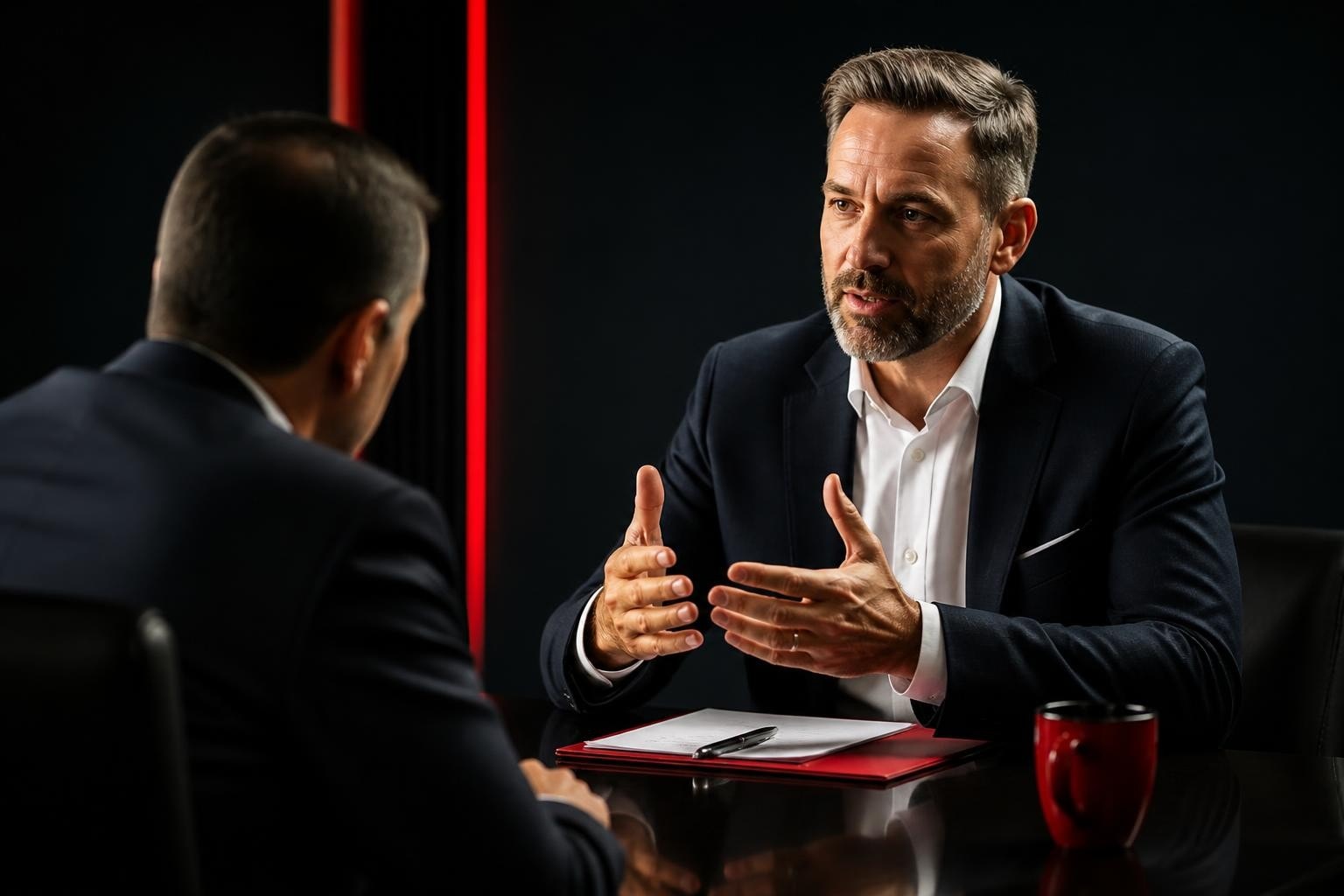
You built your company because you believed in something. You closed the first deals yourself. You carried the pitch deck, answered every objection, and stayed up late fixing what broke. That was the right move then. It's the wrong move now. Most founders cling to sales long after they should have handed it off, and it costs them growth, sanity, and sometimes the entire business. Understanding why founders should fire themselves from sales isn't about ego or delegation. It's about recognizing when your strength becomes your bottleneck.
The Founder Sales Trap Nobody Talks About
Founders are often the best salespeople early on. You understand the product. You know the pain points. You believe in the solution with a conviction no hired rep can fake. That authenticity closes deals.
But here's what happens next. You hit capacity. Your calendar fills with discovery calls, demos, and follow-ups. Revenue stalls because you can't clone yourself. Meanwhile, operations fall apart, product development slows, and strategic decisions get delayed because you're stuck in sales mode.
The trap isn't that you're good at sales. The trap is believing nobody else can do it.
I've watched this pattern destroy dozens of businesses. The owner who can't let go of sales becomes the ceiling. Revenue flatlines at whatever number of deals one person can close per month. The business doesn't scale. It just gets busier.

When Founders Become the Problem
According to research from Harvard Business Review on startup founders and sales, most founders wait too long to transition away from direct selling. The study found that founders who tried to maintain control over every deal past the first 15-20 customers consistently underperformed their peers who built sales teams earlier.
The reason is simple. Sales requires consistency, process, and repetition. Founders get bored. They chase new ideas. They skip follow-ups because something more interesting appeared. A professional salesperson, properly trained and compensated, will run the process every single time.
Here's the irony: the skills that make you a great founder often make you a terrible sales manager. You improvise. You customize every pitch. You waive terms for relationships. None of that scales.
The Real Reasons Why Founders Should Fire Themselves from Sales
Let's cut through the consultant-speak and look at what actually happens when founders refuse to step away from sales.
Reason One: You're Too Expensive
Your time has a dollar value. If you're the founder, your hourly rate should reflect strategic work: partnerships, fundraising, product direction, major hiring decisions. When you spend 40 hours a week doing discovery calls, you're burning cash.
Let's do basic math. If your effective hourly rate is $500 (conservative for most founders), and you spend 20 hours per week on sales activities, that's $10,000 per week in opportunity cost. A solid account executive costs $80,000-$120,000 per year fully loaded. You're spending more on your own time than it would cost to hire two professional salespeople.
Most founders never run this calculation. They should.
Reason Two: Your Process Doesn't Exist
When sales lives in your head, it dies when you're unavailable. There's no documentation. No playbook. No recorded calls. No objection library. Just you, doing what feels right in the moment.
The businesses that scale past seven figures all have one thing in common: documented sales processes that anyone can learn. If you can't teach someone else to close deals the way you do, you don't have a business. You have a job.
| What Founders Do | What Scalable Sales Requires |
|---|---|
| Customize every pitch | Repeatable messaging framework |
| Handle objections instinctively | Documented objection responses |
| Close on gut feeling | Defined qualification criteria |
| Follow up when they remember | Automated sequences and reminders |
| Discount based on relationships | Pricing structure with clear authority levels |
The gap between those two columns is why founders should fire themselves from sales. You can't scale intuition.
Reason Three: You're Selling to the Wrong Customers
Founders often sell to anyone who'll buy. That's survival mode, and it makes sense early on. But past a certain point, it becomes destructive.
Professional salespeople follow an Ideal Customer Profile (ICP). They qualify hard. They walk away from bad-fit deals. Founders struggle with this because every "yes" feels like validation. You end up with a messy customer base, high churn, and a reputation for being everything to everyone.
Bain Capital Ventures wrote about the MVP/ICP handshake as the critical moment when founders should transition to account-executive-led sales. Once you've proven your minimum viable product works for a specific customer profile, continuing to sell outside that profile becomes a strategic mistake.
When to Actually Fire Yourself (The Metrics That Matter)
Timing is everything. Fire yourself too early, and your sales team flounders without a proven playbook. Wait too long, and you've already stunted growth.
Here are the real signals, not the generic advice you'll find on most blogs.
Signal One: You've Closed 10-20 Customers in Your ICP
Not just any customers. Customers who fit a repeatable profile. Same industry, similar size, comparable pain points. If every deal requires a custom pitch and unique solution, you're not ready.
This aligns with guidance from SaaStr on when CEOs should step away from sales. Jason Lemkin's benchmark: close your first 10-20 customers, hit $1-2M in annual recurring revenue, then start the transition.
Signal Two: Your Sales Cycle Is Consistent
If deals close in 30-45 days consistently, you can teach that. If some close in a week and others drag for six months, you haven't figured it out yet. Consistency proves process.
Track these numbers:
- Average deal size
- Time from first contact to close
- Number of touchpoints required
- Common objections and responses
- Win rate by source channel
When these stabilize, you're ready to hire.
Signal Three: You're Turning Down Opportunities Because of Capacity
This is the clearest signal. When qualified leads sit in your inbox because you don't have time to work them, you've hit your ceiling. Revenue is now limited by your personal bandwidth.
Most founders ignore this signal because they're afraid to let go. They'd rather lose deals than risk a bad hire. That's how businesses die.

What Most Experts Get Wrong About Firing Yourself from Sales
The conventional advice is predictable: "Hire a VP of Sales." "Build a sales team." "Document your process."
All technically true. All useless without context.
The VP of Sales Mistake
Hiring a VP of Sales as your first sales hire is usually a disaster. VPs are strategists and managers. They build teams and optimize funnels. They don't grind through cold calls and build pipeline from scratch.
What most founders actually need first is a player-coach: someone who can close deals AND start building process. This is usually a senior account executive or sales manager with 5-10 years of experience, not a VP with a big title and bigger salary expectations.
I've seen founders burn through $200,000+ hiring the wrong VP of Sales before they even had a sales team to manage. The VP shows up, expects infrastructure that doesn't exist, realizes they have to do the work themselves, and quits within six months.
The Documentation Trap
Yes, you need to document your sales process. But most founders approach this backwards. They try to create the perfect playbook before they hire anyone. The playbook becomes a procrastination tool.
Here's what actually works: document the minimum viable process (your pitch deck, basic qualification questions, pricing sheet, common objections), hire someone good, and build the real playbook together based on what works.
Excelerator Partners emphasizes this handoff ritual in their guide on stepping back from founder-led sales. The documentation should capture what's working, not what you think should work.
The "Culture Fit" Excuse
Founders often reject good sales candidates because they "don't fit the culture" or "don't understand our vision." Translation: they're not founder clones.
You don't need someone who thinks like you. You need someone who sells like a professional. They should understand your ICP, believe in your product, and execute the process. Everything else is founder ego.
How to Actually Fire Yourself from Sales (The Right Way)
Knowing why founders should fire themselves from sales is worthless without execution. Here's the sequence that works.
Step One: Build Your Minimum Viable Sales Process
Before you hire anyone, document these five things:
- Your ICP definition: Who buys, why they buy, what budget they have, how they make decisions
- Your pitch structure: The 10-minute version, the 30-minute version, and the leave-behind deck
- Qualification criteria: The questions that separate real prospects from tire-kickers
- Pricing and authority levels: What you charge, what's negotiable, who can approve discounts
- Your first 30 days of onboarding: What a new salesperson needs to know and do
This shouldn't take more than a week. If it takes longer, you're overthinking it.
Step Two: Hire Your First Sales Professional
Closing Foundry’s guide on hiring first salespeople covers the common pitfalls. The biggest mistake is hiring for potential instead of proven performance.
Look for someone who has:
- Closed deals in a similar market or vertical
- Experience building process, not just following it
- A track record of hitting quota (get references and verify numbers)
- Comfort with early-stage chaos and limited resources
Pay them fairly. Base salary plus commission tied to closed revenue, not just pipeline or activity metrics. If you cheap out on compensation, you'll get cheap results.
Step Three: Shadow and Reverse-Shadow
For the first month, you shadow their calls. You listen, you take notes, you give feedback. This isn't micromanagement. It's calibration.
In month two, they shadow you less and you shadow them more. You're transferring knowledge both ways. They're learning your instincts. You're learning what they need to be successful.
SignalFire’s operational checklist for moving past founder-led sales emphasizes this transition period. Most founders skip it and wonder why their hires fail.
Step Four: Transfer Accounts Strategically
Don't hand off your entire customer base on day one. Start with new leads. Let your sales hire build their own book while you maintain relationships with key accounts.
As they prove themselves, transfer accounts in tiers:
- Month 1-2: New inbound leads only
- Month 3-4: Smaller existing customers
- Month 5-6: Strategic accounts with your introduction and joint calls
This protects revenue while building confidence.
Step Five: Measure and Iterate
Track the same metrics you tracked for yourself:
- Deal close rate
- Average deal size
- Sales cycle length
- Pipeline coverage (3x-4x their quota)
If they're hitting 70-80% of your close rate within three months, you've made a good hire. If they're below 50%, something's broken: the hire, the training, or the process.
Most founders never run this analysis. They just feel frustrated and jump back into sales themselves. That's how you stay stuck.

The Systems You Need Before You Step Away
Why founders should fire themselves from sales only makes sense if the systems exist to replace you. Here's what actually matters.
CRM That Works
You need a single source of truth for every deal, conversation, and customer interaction. It doesn't have to be fancy. It has to be used.
HubSpot, Pipedrive, Salesforce, Close. Pick one. Build your stages. Enforce data entry. Make it non-negotiable.
If your sales process lives in email inboxes and spreadsheets, you're not ready to hire.
Lead Flow That Doesn't Require You
Where do leads come from? If the answer is "my network" or "referrals I personally generate," you have a problem. Your sales team can't access your network the same way you can.
Build inbound channels before you step away:
- Content marketing that ranks for buyer keywords
- Paid ads with proven conversion rates
- Partnership channels with documented referral processes
- Outbound sequences your team can run
When I work with business owners, this is where most of them get stuck. They've built a referral-based business that only works because of their personal reputation. That's not a sales system. That's a personal brand with customers.
Tools That Enable Remote Selling
In 2026, nobody expects sales to happen face-to-face unless you're in a specific industry that requires it. Your sales team needs tools that let them sell from anywhere.
This includes modern solutions like digital business cards from Spreadly that let salespeople share contact information, schedule meetings, and capture leads without fumbling with paper cards or outdated contact exchange methods. When your team can update their information once and have it instantly reflected everywhere they've shared it, follow-up rates improve and deals move faster.
Your stack should include:
- Video conferencing (Zoom, Google Meet)
- Screen sharing and demo tools
- Proposal software (PandaDoc, Proposify)
- Scheduling automation (Calendly, Chili Piper)
- Contact management that syncs with your CRM
If your sales process requires in-person meetings or physical materials that take days to produce, you're limiting scale.
Real Examples of Founders Who Fired Themselves (And What Happened)
Theory is worthless without evidence. Here are real patterns from businesses I've worked with or studied.
The HVAC Company Owner Who Waited Too Long
$2.8M in annual revenue. Owner was still doing every estimate personally. Hired three salespeople over two years. All three failed. The owner blamed the hires.
The real problem? He never documented his process. He never transferred his relationships with suppliers and contractors. He never taught his sales team how to spot good jobs versus bad ones. Every hire was set up to fail because the owner couldn't articulate what he did instinctively.
After working with him, we spent two weeks documenting his process. We recorded his sales calls. We built a qualification scorecard. We created a pricing matrix. The next hire closed $400K in their first six months. The owner finally had time to build the operational systems the business needed.
Revenue hit $4.2M the following year. Not because he worked harder. Because he got out of the way.
The Financial Advisor Who Hired Too Early
$800K in annual revenue. She hired a junior advisor to help with sales. Paid them $50K base with minimal commission structure. The hire failed within four months.
The mistake? She hired before she had a repeatable process and before she had enough deal flow to support a salesperson. The hire spent most of their time waiting for leads that didn't exist.
Mac Accelerator’s transition guide covers this sequencing mistake in detail. You need proven deal flow before you can support a sales hire. Otherwise, you're paying someone to be bored.
She rebuilt her inbound pipeline first. Six months later, she hired again with a different comp structure and better expectations. That hire is still with her three years later and generates $1.2M in annual revenue.
The SaaS Founder Who Did It Right
Closed 15 customers. Hit $1.5M ARR. Built a basic playbook. Hired a senior AE with vertical experience. Paid them $100K base plus 10% commission on closed deals.
The founder stayed involved for 90 days, shadowing calls and refining messaging. Then stepped back to focus on product and fundraising. The AE closed $800K in new business their first year. They hired two more reps the following year.
Revenue is now at $6.4M with a team of five salespeople and a VP of Sales the founder hired once the team reached critical mass. The founder hasn't taken a sales call in 18 months.
That's what right looks like.
The Founder Sales Exit Checklist
Use this before you make any hiring decisions. If you can't check every box, you're not ready.
Process and Documentation:
- ICP defined with specific demographic and firmographic criteria
- Sales pitch recorded and documented
- Qualification questions written and tested
- Pricing structure documented with discount authority levels
- Objection handling guide created
- Sales stages defined in CRM
Pipeline and Metrics:
- Consistent lead flow of 20+ qualified leads per month
- Close rate tracked and stable for 3+ months
- Average deal size calculated
- Sales cycle length documented
- 3-4x pipeline coverage available for new hire
Systems and Tools:
- CRM implemented and actively used
- Lead routing process defined
- Demo/presentation materials ready
- Proposal generation process documented
- Contract and legal templates prepared
Financial and Organizational:
- Compensation plan designed (base + commission)
- Quota set based on realistic pipeline
- Onboarding plan created (30/60/90 days)
- Performance metrics defined
- Budget allocated for ramp time (3-6 months)
If you're missing more than two items, don't hire yet. Fix the gaps first.
What to Do After You Fire Yourself
Stepping away from sales doesn't mean disappearing. It means changing your role.
Your New Sales Responsibilities
- Close strategic deals: The seven-figure contracts, the partnerships, the customers that require founder credibility
- Train and develop: Regular coaching sessions with your sales team
- Monitor metrics: Weekly pipeline reviews, monthly performance analysis
- Refine ICP: As the market evolves, update who you target and why
- Remove obstacles: When your team hits barriers they can't solve, you clear the path
You're not doing the daily grind. You're doing the things only a founder can do.
The Mental Shift Required
Most founders struggle with this transition because they tie their identity to sales. You're the rainmaker. You're the closer. Letting go feels like losing control.
Here's the truth: you're not losing control. You're gaining leverage.
Every hour you spend on a sales call that someone else could handle is an hour you're not spending on strategy, product, or building the business. Why founders should fire themselves from sales ultimately comes down to this: your job is to build a company, not close every deal.
The founders who scale are the ones who recognize when their strength becomes their limitation. They hire, they train, they trust, and they move on to the next bottleneck.
The founders who don't scale are the ones who convince themselves they're irreplaceable. They're not wrong about being good at sales. They're wrong about being the only one who can do it.
The Uncomfortable Truth About Founder-Led Sales
Nobody wants to admit this, but I'll say it: most founders stay in sales because it's comfortable. You know how to do it. You're good at it. It feels productive.
Strategy is hard. Building systems is tedious. Managing people is frustrating. Sales gives you immediate feedback and dopamine hits when deals close.
But comfort is the enemy of growth. The business that needs you in sales forever is a business that never scales. It plateaus at your personal capacity and stays there until you burn out or sell for less than it's worth.
I've built and exited multiple seven-figure businesses. None of them scaled until I got out of my own way. The hardest lesson I learned was that being indispensable is a liability, not an asset.
If your business can't run without you, you don't own a business. You own a job. And it's a job you can't quit, can't sell, and can't scale.
That's why founders should fire themselves from sales. Not because sales isn't important. Because your job is to build something bigger than what you can personally touch.
Most founders wait too long to step away from sales, and it costs them growth they'll never recover. The transition from founder-led to team-led sales requires documented process, proven deal flow, and the right first hire. If you're stuck in sales and don't know how to build the systems to replace yourself, Accountability Now specializes in helping business owners build scalable sales processes, hire the right people, and finally stop being the bottleneck in their own business.