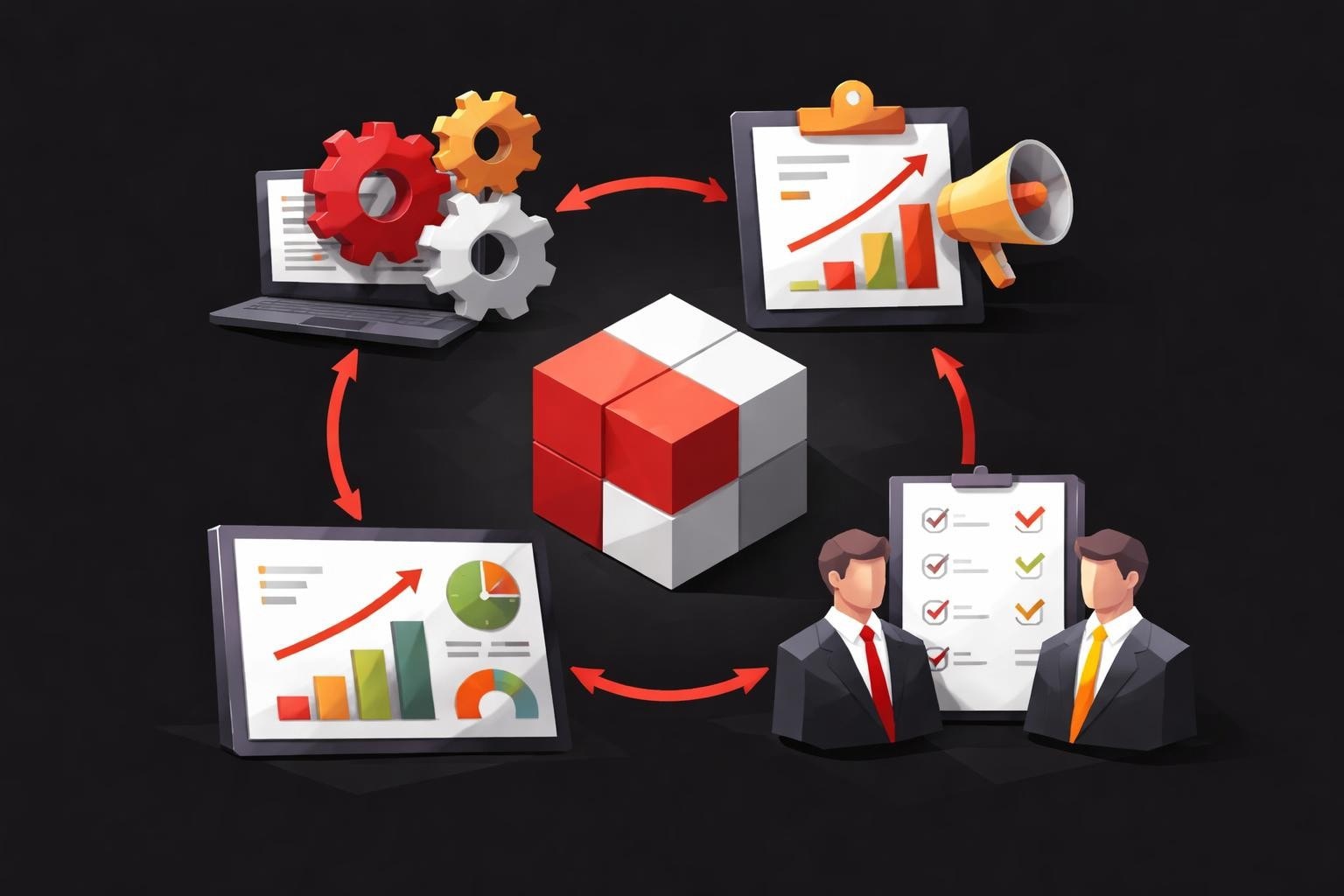
The world of business consulting is evolving at breakneck speed, making 2026 a transformative year for every business and management consultant. As companies face new challenges, there is a clear shift towards practical, real-world consulting that delivers measurable outcomes rather than generic advice.
Clients now expect consultants to adapt, innovate, and show tangible results. To succeed, consultants must embrace emerging trends, master essential skills, explore new consulting models, leverage technology, and implement actionable strategies. This guide will help you navigate the future of consulting with confidence and clarity.
The Evolving Role of Business and Management Consultants in 2026
The business and management consultant profession is undergoing rapid transformation as we approach 2026. Companies increasingly expect consultants to deliver more than strategic advice. They want real-world execution, measurable impact, and specialized expertise. To thrive, a business and management consultant must evolve their approach, skills, and service offerings to stay ahead of changing client demands.
Shifting Expectations from Clients
Clients in 2026 are setting new standards for the business and management consultant. There is a strong push for hands-on support, with clients expecting consultants to actively participate in implementation, not just strategy sessions.
A striking 78% of businesses in 2023 wanted consultants to help execute plans, reflecting a clear shift away from traditional advisory roles. Transparency, accountability, and the ability to demonstrate a tangible ROI have become non-negotiable. Clients are also seeking flexible engagement terms, prioritizing consultants who can adapt to their evolving needs.
For a comprehensive overview of how these shifts are shaping the industry, review the Top 10 Consulting Industry Trends, which highlights the demand for personalized, measurable consulting solutions.
New Consulting Models and Approaches
The business and management consultant landscape now includes innovative models that cater to these client expectations. The “player-coach” and embedded consultant models are gaining momentum, allowing consultants to work alongside clients as both strategists and implementers.
Flexible, no-contract engagements are increasingly popular, especially among small and mid-sized businesses. There has been a noticeable surge in month-to-month consulting agreements, empowering clients to adjust their consulting needs without long-term commitments.
These new approaches foster trust and encourage long-term partnerships by focusing on value delivered, not just hours billed.
Specialization and Industry Expertise
A business and management consultant with niche expertise is now more valuable than ever. Companies want consultants who deeply understand their sector and can offer tailored solutions.
Specialization in areas like medical, financial, or home services is proving to be a key differentiator. Consultants who bring sector-specific knowledge are consistently outperforming generalists, as they can address unique industry challenges and regulations.
Industry expertise allows consultants to deliver more relevant insights and drive faster results for their clients.
Data-Driven and Evidence-Based Consulting
The modern business and management consultant is expected to back every recommendation with data. Clients want to see real metrics and KPIs that prove progress and success.
Evidence-based consulting is now a top hiring factor, with 65% of clients rating it as critical. Consultants are using dashboards, analytics, and performance tracking tools to provide transparency and build trust.
By embracing a data-driven mindset, consultants can demonstrate the true value of their work and drive continuous improvement.
The Rise of Accountability and Execution-Focused Firms
The market has shifted away from theoretical advice and mindset coaching. Clients now favor business and management consultant firms that prioritize accountability and execution.
Execution-focused firms are hands-on, helping clients implement strategies and achieve measurable outcomes. They offer tactical support and regular check-ins to ensure goals are met.
This focus on practical results is reducing client churn and increasing satisfaction, as businesses see direct improvements in performance.
Accountability Now: A Model for Real-World Consulting
Accountability Now exemplifies the new standard for the business and management consultant. Their player-coach methodology puts consultants in the trenches with business owners, driving real change.

Operating on a no-contract, month-to-month basis, Accountability Now addresses the needs of small businesses seeking flexibility and transparency. Their approach is recognized by Forbes, Business Insider, and Yahoo Finance for its emphasis on practical execution, honest feedback, and measurable results.
Client testimonials highlight the value of working with consultants who are as invested in outcomes as their clients are. This model is setting the benchmark for what businesses should expect from a consulting partnership.
Essential Skills and Competencies for Consultants in 2026
The path to success as a business and management consultant in 2026 is defined by a dynamic set of skills. Today’s consultants must adapt quickly, deliver measurable outcomes, and use evidence-based approaches. As the industry evolves, mastering both soft and technical skills is vital to remain competitive and deliver real value to clients.

Advanced Problem-Solving and Critical Thinking
Every business and management consultant faces complex challenges that require clear, analytical thinking. In 2026, the ability to quickly diagnose root causes and design actionable solutions is a top differentiator. Consultants rely on proven frameworks to break down issues, assess risks, and identify opportunities.
Key techniques include SWOT analysis, root cause analysis, and scenario planning. These methods help consultants move beyond surface-level symptoms to address core business problems. By sharpening critical thinking, consultants position themselves as trusted advisors capable of delivering results in any environment.
Communication and Stakeholder Management
Exceptional communication is essential for the modern business and management consultant. Clear, concise messaging builds trust and ensures alignment across diverse teams. In 2026, consultants must navigate complex organizational structures, managing relationships with executives, team leads, and frontline staff.
Effective stakeholder management means listening actively, adapting communication styles, and resolving conflicts diplomatically. Consultants also facilitate productive workshops and present insights in ways that drive action. Mastery in this area helps consultants influence decisions and guide organizations through change.
Technology Literacy and AI Integration
A business and management consultant must be fluent in the latest technologies. Mastery of automation tools, CRM platforms, and AI-powered analytics is now a baseline requirement. Consultants use AI for data analysis, workflow automation, and even content generation, enabling them to deliver faster, more accurate recommendations.
Real-world examples include leveraging ChatGPT for research, GoHighLevel for client management, and Make.com for process automation. By embracing technology, consultants boost efficiency and unlock new value for clients, setting themselves apart in a tech-driven marketplace.
Sales and Revenue Generation Expertise
In 2026, a business and management consultant is expected to bring sales acumen to the table. Clients increasingly request guidance on building scalable sales systems and improving close rates. Consultants coach business owners on prospecting, pipeline management, and sales team training.
Consider the growing demand for sales consulting, with 60 percent of small business clients prioritizing revenue growth strategies. Consultants who can demonstrate proven results in sales process improvement are uniquely positioned to attract and retain clients seeking tangible business growth.
Change Management and Implementation
Guiding organizations through change is a defining skill for any business and management consultant. As companies face rapid shifts in technology and market dynamics, consultants must lead both operational and cultural transitions. This involves designing change strategies, engaging stakeholders, and tracking adoption rates.
Statistics show that 70 percent of consulting projects in 2025 include a change management component. By focusing on execution and follow-through, consultants ensure that strategic recommendations translate into sustainable, long-term improvements for their clients.
Continuous Learning and Industry Adaptation
To remain effective, a business and management consultant must commit to ongoing learning. The consulting landscape is in constant flux, with new regulations, technologies, and best practices emerging regularly. Staying ahead means investing in professional development, industry research, and peer learning.
Resources like Key Skills for Consultants in 2026 provide valuable insights into the evolving skill set required for consultants. By prioritizing continuous improvement, consultants safeguard their relevance and deliver enduring value to clients.
Technology and Digital Transformation in Consulting
The landscape for every business and management consultant is evolving rapidly as technology redefines consulting in 2026. Digital transformation is no longer a trend but a necessity for firms aiming to deliver measurable results and meet client expectations. Let us explore how automation, AI, data analytics, cybersecurity, remote tools, and digital marketing are reshaping the consulting sector.

Leveraging Automation and AI for Client Success
In 2026, automation and AI are essential tools for any business and management consultant striving to drive client success. Consultants now use AI-powered platforms to streamline operations, automate repetitive tasks, and provide predictive business insights. For example, service businesses benefit from automated lead generation and follow-up, which increases efficiency and minimizes missed opportunities.
Consider tools that integrate AI with workflow automation, allowing consultants to focus on strategic initiatives rather than manual processes. Platforms like ChatGPT and Make.com are being used to draft proposals, generate reports, and even deliver personalized client recommendations. For a deeper look at these advancements, see Automation and AI in Consulting.
Data Analytics and Performance Tracking
Measuring progress with real data is a top priority for every business and management consultant. Consultants are implementing real-time dashboards to track KPIs, monitor client performance, and demonstrate ROI. This data-driven approach allows for transparent reporting and enables consultants to adjust strategies quickly.
Using advanced analytics, consultants can identify trends, forecast outcomes, and optimize business operations. Regular performance reviews, backed by concrete data, build client trust and highlight the value consultants deliver. Clients now expect routine metric updates and clear evidence of progress.
Cybersecurity and Data Privacy Considerations
With digital transformation, cybersecurity is a critical concern for every business and management consultant. As more client data moves online, ensuring robust data protection has become non-negotiable. Eighty percent of clients in 2026 cite data privacy as a leading concern when engaging digital consulting services.
Consultants must implement strict security protocols, including encrypted communications, secure cloud storage, and compliance with evolving regulations. Proactive risk assessments and client education on cyber hygiene are now standard parts of consulting engagements. Trust hinges on the consultant’s ability to safeguard sensitive information.
Remote Consulting and Virtual Collaboration Tools
The rise of remote work has transformed how a business and management consultant delivers value. Virtual workshops, cloud-based project management, and online training are the new norm. These tools enable consultants to serve clients globally, regardless of location.
Consultants use platforms for seamless document sharing, real-time collaboration, and virtual whiteboarding. This flexibility not only reduces costs but also increases accessibility for small and mid-sized businesses. The post-2020 surge in remote consulting continues, with more firms investing in robust virtual infrastructure.
Digital Marketing and SEO Integration
Today’s business and management consultant is expected to guide clients in building a strong digital presence. This includes integrating digital marketing, lead generation, and SEO strategies into consulting packages. Over half of SMBs now invest in SEO-focused consulting to accelerate growth.
Consultants help clients optimize websites, improve search visibility, and implement targeted campaigns. By combining technology with proven marketing tactics, consultants ensure their clients stay competitive in a crowded digital landscape. Digital transformation is not just about tools, but about driving measurable business results.
Steps to Building a Successful Consulting Practice in 2026
In 2026, standing out as a business and management consultant requires more than expertise. You need a strategic approach that adapts to evolving client demands, leverages technology, and delivers measurable outcomes. Here are the essential steps to build a thriving consulting practice in today’s dynamic environment.

Step 1: Define Your Niche and Target Audience
The foundation for every successful business and management consultant is a clear specialization. In 2026, clients value deep expertise over general advice. By focusing on a specific sector—like medical, financial, or home services—you establish credibility and differentiate yourself in a crowded market.
Start by researching market needs and identifying where your skills align with growing industries. For example, medical and financial consulting niches have experienced rapid growth, attracting clients who demand tailored solutions. Defining your niche also streamlines your marketing and allows you to build a reputation as an authority in your chosen field.
Step 2: Develop a Results-Oriented Service Offering
Modern clients expect tangible outcomes from every business and management consultant. Design your services around measurable results and execution, not just strategy sessions. This means offering clear deliverables, regular progress updates, and built-in accountability.
Many leading firms now provide unlimited training and ongoing support, helping clients implement solutions successfully. For actionable approaches to driving business growth, review Business Growth Coaching Strategies, which highlights proven methods for execution-focused consulting. By focusing on results, you not only meet but exceed client expectations.
Step 3: Build a Flexible, Client-Centric Engagement Model
Traditional consulting contracts are giving way to flexible, client-centric models. As a business and management consultant, consider offering month-to-month or no-contract engagements. This approach builds trust, lowers barriers to entry, and allows clients to assess value without long-term commitments.
Recent data shows a 40 percent rise in flexible engagements since 2023, especially among small and medium businesses. Clearly outline your terms, set expectations for deliverables, and be open to adapting your services to evolving client needs. Flexibility is a key differentiator in the modern consulting landscape.
Step 4: Leverage Technology for Efficiency and Scale
A forward-thinking business and management consultant integrates technology at every stage. Automate onboarding, reporting, and client management using CRM systems and workflow automation tools. AI platforms can streamline repetitive tasks, freeing up your time for high-impact activities.
By embracing technology, you increase efficiency, reduce errors, and scale your services to handle more clients. Digital tools also enhance communication and transparency, giving clients real-time access to progress and results. Staying current with tech trends ensures your consulting practice remains competitive in 2026.
Step 5: Establish Your Authority and Brand
Building authority is crucial for any business and management consultant aiming for long-term success. Publish thought leadership content, share case studies, and collect testimonials to showcase your expertise. Recognition from media outlets and industry awards further boosts your credibility.
Regularly update your website and social channels with valuable insights. Participate in industry events or webinars to network and demonstrate your knowledge. A strong personal and business brand attracts ideal clients and positions you as a trusted advisor in your niche.
Step 6: Foster Community and Peer Learning
Creating a sense of community adds significant value to your consulting packages. As a business and management consultant, facilitate peer groups or mastermind sessions where clients can share experiences, challenges, and solutions. This approach fosters collaboration, accountability, and motivation.
Exclusive client communities not only improve retention but also generate referrals and new business opportunities. Peer learning environments help clients achieve better results and position your consulting practice as a leader in fostering meaningful business relationships.
Step 7: Measure, Refine, and Scale
Continuous improvement is essential for every business and management consultant. Use feedback, performance data, and client outcomes to refine your service offerings regularly. Leading consultants iterate their packages annually, adapting to new trends and client needs.
Track key performance indicators to ensure you deliver on promises and identify areas for growth. By measuring impact and making data-driven adjustments, your consulting practice will remain agile and positioned for long-term success in 2026.
Key Trends and Future Insights for Business Consultants
In 2026, the business and management consultant landscape is evolving rapidly, with innovation and accountability at the forefront. Understanding the latest trends is essential for consultants aiming to thrive and deliver maximum value to their clients.
The Growth of Fractional Executive Services
One of the top trends for every business and management consultant is the rise of fractional executive roles. Companies, especially small and mid-sized businesses, increasingly seek access to seasoned leaders without the cost of a full-time hire. Fractional COOs and CROs deliver expertise on demand, filling gaps in leadership, operations, or revenue strategy.
This flexible approach allows organizations to scale leadership as needed, while consultants benefit from ongoing, high-value engagements. According to Tech Consulting Market Growth Projections, the global tech consulting market is set to surpass $400 billion in 2026, reflecting this trend’s significant momentum.
Business and management consultant professionals who develop fractional service offerings can position themselves at the leading edge of industry change.
Demand for No-Fluff, Execution-Based Consulting
Modern clients want more than theories. They want their business and management consultant to focus on real execution and tangible results. Firms that prioritize actionable support and honest feedback are seeing lower client churn and higher satisfaction.
This trend is driving consultants to embed themselves within client teams, often as “player-coaches” who guide implementation and measure progress. Execution-based consulting models are quickly becoming the industry standard, moving away from advice-only engagements.
Clients are increasingly vocal about rejecting hype and demanding transparency, pushing consultants to deliver direct, measurable impact.
Expansion of Unlimited Training and Support Models
Unlimited training and ongoing support are becoming key differentiators for the business and management consultant in 2026. Top firms now offer weekly leadership sessions, sales coaching, and on-demand resources as part of their packages.
This shift meets client needs for continuous learning and adaptation in a fast-moving market. Consultants who integrate regular training into their services help clients build resilient teams and foster a culture of growth.
The approach leads to improved retention rates, as clients value the ongoing partnership and immediate access to expert advice.
Community-Driven Consulting and Peer Networks
Today’s business and management consultant is not just a solo advisor but a facilitator of peer learning and community. Exclusive business communities and mastermind groups are on the rise, providing clients with networking, collaboration, and shared accountability.
These peer networks drive higher client retention and satisfaction, as members benefit from collective problem-solving and diverse perspectives. Consultants who create or curate these communities add significant value beyond traditional advisory services.
Community-driven models also open doors to new business opportunities and referrals, strengthening the consultant’s position in the market.
Increasing Focus on Measurable Outcomes
Clients now judge a business and management consultant by their ability to deliver clear, quantifiable results. Key performance indicators (KPIs) are built into every engagement, with progress tracked through dashboards and regular reporting.
Consultants must use data analytics to demonstrate ROI and adapt strategies based on real-world outcomes. This evidence-based approach ensures accountability and aligns consultant success with client achievements.
The shift to outcome-driven consulting is reshaping the industry’s reputation, making transparency and measurement central to every project.
Ethical Consulting and Transparency
With clients demanding greater integrity, ethical practices and transparent reporting have become non-negotiable for every business and management consultant. Firms with clear pricing, open communication, and honest assessments consistently outperform peers.
Consultants are now expected to disclose all terms and avoid hidden fees, building trust and long-term relationships. Ethical consulting also extends to responsible use of data and technology, ensuring clients’ interests remain protected at every stage.
The future of the industry depends on maintaining high standards and fostering client confidence through unwavering transparency.