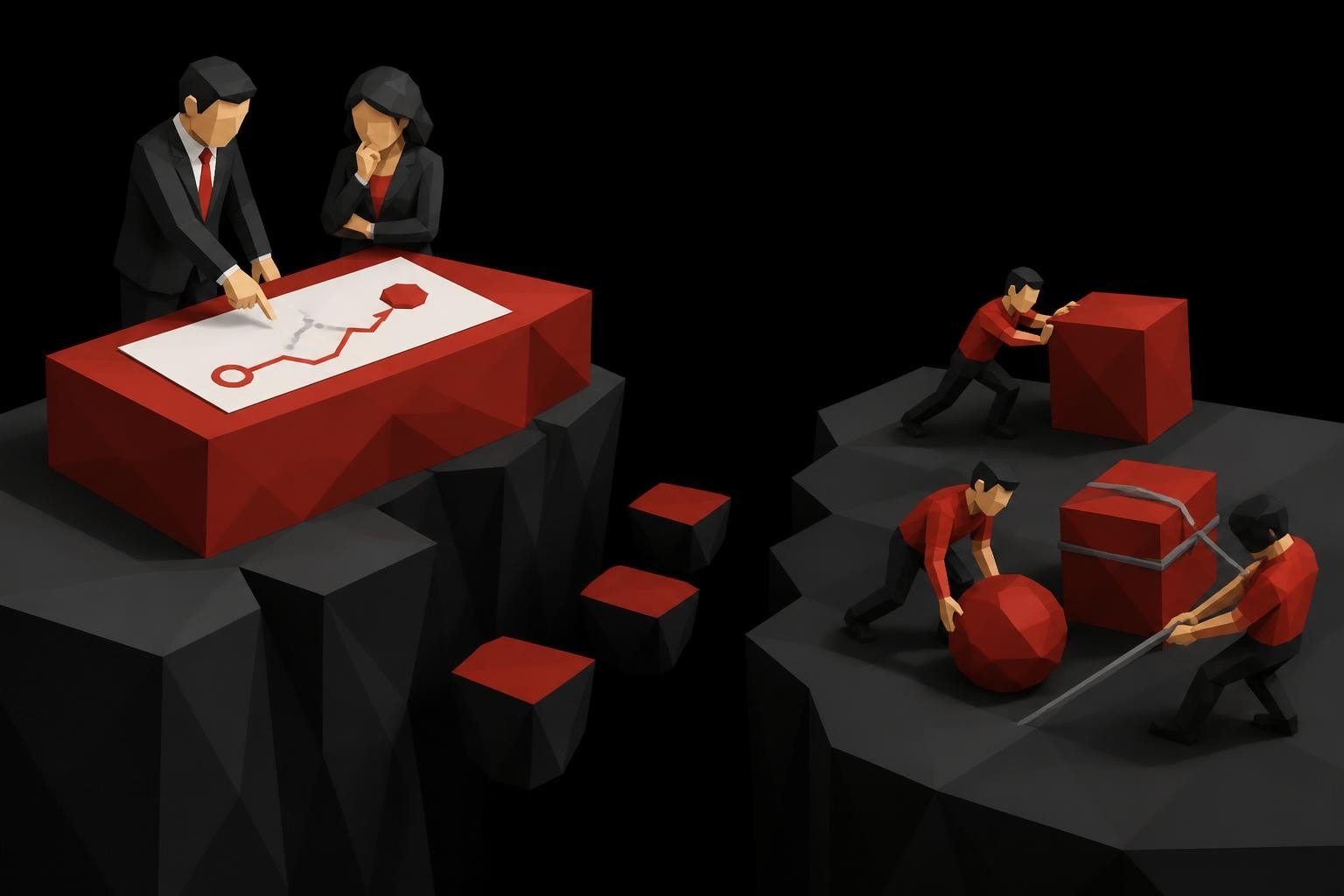
The iran war tests business resilience in ways most owners aren't prepared for. Not because they lack intelligence or resources, but because they're listening to consultants who've never navigated a real crisis. When geopolitical shocks hit, the weakest link in your business isn't your technology or your capital. It's your assumptions about how things work when normal breaks down. I've watched hundreds of businesses face disruptions over twenty years, from market crashes to supply chain collapses. The ones that survive share one trait: they built systems before they needed them, not after.
Why Most Business Continuity Plans Fail During Real Crises
Most business continuity plans are documents, not systems. They sit in SharePoint folders gathering digital dust while owners check a compliance box and move on. When the iran war tests business resilience, those plans expose what they always were: theoretical exercises written by people who've never had to execute under pressure.
Here's what breaks first:
- Communication protocols that assume everyone has internet access
- Supply chain backups that exist only in vendor promises
- Financial reserves that aren't actually liquid
- Decision-making hierarchies that require people who aren't available
The problem isn't the plan itself. The problem is that most plans optimize for passing an audit, not surviving chaos. I've seen this pattern repeatedly: businesses invest thousands in consulting reports that outline 47 steps to manage disruption, then fail because nobody practiced step one.
The Real Test Is Execution Speed
When Thomson Reuters Institute outlines the potential economic impact of the US-Iran war, they focus on supply chain disruptions and economic ripple effects. That's accurate, but it misses the tactical reality for small business owners. You don't have time to analyze macroeconomic trends when your primary supplier just went offline or fuel costs doubled overnight.
The businesses that adapt fastest share three characteristics:
- Decision authority is distributed, not centralized
- Cash reserves are accessible, not tied up in investments
- Vendor relationships are personal, not transactional
| Business Type | Primary Vulnerability | Common Mistake |
|---|---|---|
| Home Services | Fuel and material costs | Single-source suppliers |
| Medical Practices | Pharmaceutical supply chains | Just-in-time inventory |
| Financial Services | Client panic and withdrawal | No crisis communication plan |
| Mental Health | Staff availability and safety | Centralized scheduling systems |

Supply Chain Mapping Nobody Actually Does
Everyone talks about supply chain resilience. Almost nobody maps their actual dependencies until it's too late. The iran war tests business resilience by exposing these blind spots faster than any audit ever could.
Here's the exercise most consultants recommend: map your tier-one suppliers. Here's what actually matters: map your suppliers' suppliers, and their geographic chokepoints. MSCI’s blog post analyzes the supply-chain risks posed by the conflict, emphasizing revenue mapping and operational exposure. That's the right approach, but small business owners need a simpler version.
The Three-Layer Test
Ask yourself three questions:
Layer One: Direct Impact
Can you name every supplier that could stop your operations within 48 hours? Not your top ten vendors. Every single critical dependency.
Layer Two: Geographic Exposure
Where are those suppliers physically located, and what happens if shipping routes change or fuel prices spike? Most owners can't answer this because they've never asked.
Layer Three: Substitution Timeline
How long would it actually take to switch suppliers, not in theory, but including relationship building, quality testing, and payment terms negotiation?
I worked with an HVAC contractor in 2024 who thought he had backup suppliers. When his primary parts distributor faced shipping delays, he discovered his "backup" sourced from the same overseas manufacturer with a six-week lead time. The substitution he thought would take three days actually took five weeks and cost him $87,000 in lost jobs.
The Cash Position Most Owners Lie to Themselves About
Financial advisors love to talk about maintaining three to six months of operating expenses in reserve. That advice works great until you need it and discover your "reserves" aren't accessible. The iran war tests business resilience partly through energy cost inflation and logistics delays, both of which hit cash flow before they hit revenue.
Here's the truth most owners avoid:
Your cash position isn't what's in your bank account. It's what you can access in 72 hours without selling assets at a loss or taking predatory loans. That number is almost always lower than owners think.
The Liquidity Audit Nobody Runs
Run this audit quarterly, not when crisis hits:
- How much cash can you access in 24 hours?
- How much in 72 hours?
- What credit lines are available with no additional approval needed?
- Which assets could you sell in one week at 80% of value?
- What expenses could you eliminate in 48 hours without operational collapse?
Most owners guess at these answers. Guessing kills businesses. One medical practice owner I coached thought she had $120,000 in accessible reserves. When we ran the actual numbers, it was $31,000. That gap could be the difference between weathering a crisis and closing permanently.
| Timeline | What Most Owners Think | What's Usually True |
|---|---|---|
| 24 hours | Bank balance minus payroll | Actually available after holds/transfers |
| 72 hours | Line of credit approved amount | Amount accessible without new approval |
| 1 week | Investment accounts | Liquidation value after penalties/fees |

Why Client Communication Breaks Down When You Need It Most
The iran war tests business resilience through uncertainty, and uncertainty makes clients anxious. Anxious clients make irrational decisions unless you communicate proactively. Most businesses fail this test because they wait for clients to ask questions instead of answering them first.
I've seen this pattern destroy businesses that should have survived:
Crisis hits → Owners focus internally on operations → Clients feel abandoned → Clients make fear-based decisions → Revenue collapses before operations actually fail.
The 24-Hour Rule
When a major disruption occurs, you have 24 hours to communicate with clients before they create their own narrative. That narrative is almost always worse than reality.
Here's what works:
- Acknowledge the situation without speculation or panic
- Explain your specific continuity measures (not theory, actual steps you're taking)
- Set clear expectations for service delivery
- Provide a direct contact for concerns (not a general inbox)
- Follow up within 72 hours with updates, even if nothing has changed
A roofing company I worked with in early 2025 faced material cost increases of 40% during regional instability. The owner sent a detailed email within 18 hours explaining the situation, his material backup plan, and how he was protecting existing project quotes. He lost zero clients. His competitor waited a week, hoping prices would stabilize. That competitor lost 23% of his pipeline to cancellations.
The Technology Dependencies You Haven't Stress-Tested
CIOs managing risks associated with the Iran conflict focus on business continuity plans and regional instability impacts. Small business owners face similar technology risks but with fewer resources and less redundancy.
Most businesses run on cloud systems they don't control and don't understand. That's fine until it's not. The iran war tests business resilience partially through infrastructure disruptions, both physical and digital.
Critical questions most owners can't answer:
- Where is your data actually stored geographically?
- What happens if your primary software vendor faces service interruptions?
- Do you have offline access to essential business information?
- Can your team operate without internet for 48 hours?
The Offline Operations Test
Here's a simple stress test: Turn off your internet for four hours and see what stops working. Not in theory. Actually do it.
One financial advisor I coached discovered he couldn't access client contact information, couldn't process transactions, and couldn't even open his schedule without internet. His entire business model required constant connectivity he'd never thought to back up.
Minimum offline capabilities:
- Client contact information in exportable format
- Essential operational documents in local storage
- Alternative communication methods (phone trees, not just email)
- Basic financial tracking that doesn't require cloud access
This isn't about becoming a prepper. It's about recognizing single points of failure before they fail.
Staffing Flexibility That Exists Only on Paper
The iran war tests business resilience through uncertainty that affects your team's availability and mental state. Most businesses have zero actual flexibility in how work gets done because they've optimized for efficiency, not adaptability.
Here's the disconnect:
Owners say, "We're flexible, people can work remotely." Then a crisis hits and they discover their "remote work policy" assumes stable internet, home environments suitable for focused work, and team members without competing family obligations.
Cross-Training You Skipped Because Everyone Was Busy
The number one operational vulnerability I see in small businesses is knowledge concentration. One person knows how to process payroll. One person manages client scheduling. One person handles vendor relationships. When that person is unavailable, everything stops.
Cross-training feels like wasted time when operations are smooth. It's survival insurance when they're not.
Minimum cross-training requirements:
- Every critical process has two people who can execute it
- Every client relationship has a documented backup contact
- Every vendor relationship includes secondary decision-makers
- Every system has written procedures, not tribal knowledge
I audited a mental health practice that had seven therapists but only one person who understood their billing system. When that person faced a family emergency during a regional crisis, the practice went six weeks without submitting insurance claims. Cash flow almost killed them. The knowledge existed in one person's head, and when she was unavailable, nobody could access it.
| Critical Function | Primary Owner | Backup | Documentation |
|---|---|---|---|
| Payroll processing | [name] | None | Verbal only |
| Client emergency contact | [name] | None | Spreadsheet |
| Vendor negotiation | Owner | None | Email history |
| System administration | IT contractor | None | None |
This is what failure looks like on paper before it happens in reality.

The Regional Impact Most National Businesses Ignore
The severe impact of the Iran war on Southeast Asia’s tourism-dependent economies demonstrates how regional disruptions cascade globally. Small business owners with seemingly local operations often have hidden international dependencies they've never mapped.
Your HVAC company in Ohio might source components manufactured in countries affected by shipping route changes. Your medical practice might rely on pharmaceuticals with supply chains running through disrupted regions. Your financial services firm might serve clients with international exposure they're not disclosing.
The Hidden International Exposure Audit
Most small business owners think they're purely domestic operations. Most are wrong.
Check these dependencies:
- Where are your products actually manufactured (not where your distributor is located)?
- What percentage of your client base has international revenue or operations?
- Which of your software vendors operate critical infrastructure in affected regions?
- How do fuel price changes affect your cost structure and your clients' ability to pay?
A general contractor I worked with in 2025 thought he ran a purely local business. When we mapped his supply chain, we discovered that 60% of his materials had components sourced from overseas, and fuel costs were 18% of his total project expenses. Regional instability that seemed irrelevant suddenly threatened his margins and his ability to honor fixed-price contracts.
Scenario Planning That Goes Beyond Happy Talk
Most strategic planning sessions involve optimistic scenarios and mild downturns. The iran war tests business resilience by forcing businesses to confront scenarios they've deliberately avoided thinking about. Academic research on Iran’s confrontation with the West shows sustained impacts on economic institutions that outlast immediate crises.
Here's what's missing from most planning:
Real worst-case scenarios. Not "revenue dips 10%" scenarios. Actual worst case: What happens if your top client goes bankrupt? What happens if fuel costs triple? What happens if you lose access to your primary supplier for six months?
The Three-Scenario Framework
Build plans for three scenarios, not one:
Optimistic Recovery (20% likelihood):
Crisis resolves quickly, disruptions minimal, business returns to normal within 60 days. What opportunities can you capture?
Extended Disruption (60% likelihood):
Crisis continues for 6-12 months with rolling impacts on supply chains, costs, and client behavior. What adaptations ensure survival?
Severe Breakdown (20% likelihood):
Multiple cascading failures, extended regional instability, fundamental business model changes required. What's your escape plan?
Most owners spend 90% of their planning time on the optimistic scenario because it feels good. The businesses that survive spend 70% of their time planning for extended disruption and 20% on severe breakdown. Hope is not a strategy.
Decision-Making Speed Versus Decision-Making Quality
The iran war tests business resilience partly through the speed required to adapt. Most small business owners are used to deliberate decision-making: gather information, consult advisors, consider options, implement carefully. Crisis eliminates that luxury.
The tension nobody resolves:
Fast decisions often mean wrong decisions. Slow decisions often mean missed opportunities. The answer isn't choosing one over the other. It's knowing which decisions require speed and which require accuracy.
The Decision Matrix Most Owners Skip
Categorize decisions before crisis hits:
| Decision Type | Speed Required | Acceptable Error Rate | Decision Maker |
|---|---|---|---|
| Client communication | 24 hours | Low (5%) | Owner or designated backup |
| Vendor switching | 72 hours | Medium (20%) | Operations lead |
| Pricing changes | 1 week | Low (10%) | Owner with financial review |
| Staff policy changes | 48 hours | Medium (15%) | HR lead or owner |
I watched a business owner in 2025 spend three weeks deciding whether to switch suppliers during a material shortage. By the time he decided, his original supplier had resolved issues, but his competitor had already captured the delayed projects. His deliberate process cost him $200,000 in lost revenue. He optimized for decision quality when the situation required decision speed.
The Vendor Relationships That Actually Matter
When Squire Patton Boggs examines implications of the Iran war for global industries, they emphasize supply chain reassessment and investment decisions. For small business owners, this translates to a simple question: Do your vendors actually care if you survive?
Most vendor relationships are transactional. You pay, they deliver. That works fine until it doesn't. The iran war tests business resilience by revealing which vendor relationships can handle stress and which can't.
The Relationship Depth Test
Score your critical vendors on these factors:
- Do they know your business model? (Not just what you buy, but why and how you use it)
- Have they ever modified terms to help you during difficulty?
- Do you have direct contact with decision-makers?
- Would they prioritize your order during shortage?
- Have you ever helped them solve a problem?
Vendors who score 4-5 are relationships. Vendors who score 0-2 are transactions. Transactions fail you in crisis. Relationships give you options.
A plumbing contractor I worked with had bought from the same supplier for eight years but had zero relationship depth. When materials became scarce in early 2026, his orders were delayed repeatedly while newer customers with stronger relationships got priority. He'd been loyal but not strategic. Loyalty without relationship equity is worthless.
Insurance Coverage That Doesn't Cover What You Think
Business interruption insurance sounds great until you read what actually triggers coverage. The iran war tests business resilience partly through disruptions that don't meet policy definitions. Most small business owners discover their coverage gaps during claims, not during shopping.
Common gaps nobody explains:
- Coverage requires physical damage to your property (supply chain disruptions don't qualify)
- Pandemics and "acts of war" are often explicitly excluded
- Waiting periods mean you're self-funding the first 48-72 hours minimum
- Coverage limits assume you can restart operations, not that you're blocked from operating
The Policy Audit Nobody Runs
Pull your business interruption policy right now and answer these questions:
- What specific events trigger coverage?
- What's excluded that you assumed was covered?
- What's the waiting period before payments begin?
- What documentation do you need to file a claim?
- Have you tested the claims process with your insurer?
Most owners can't answer these questions without calling their agent. That gap could cost you everything. One medical practice owner I coached thought she had comprehensive coverage. When COVID-19 hit, she discovered pandemic exclusions. When supply chain issues affected her operations in 2025, she discovered that didn't qualify either. Her $8,000 annual premium bought far less protection than she believed.
The Psychological Resilience Factor Everyone Ignores
The iran war tests business resilience in ways balance sheets can't measure. Owner burnout, team anxiety, decision fatigue. These aren't soft factors. They're operational constraints that destroy businesses as surely as cash flow problems.
Here's what I've seen repeatedly:
Owners who maintain discipline during crisis outperform owners with better resources who panic. The margin between survival and failure often comes down to psychological resilience, not financial strength.
The Personal Operating System Check
Before crisis hits, audit your personal resilience:
- How much sleep do you need to make good decisions?
- What's your decision-making quality after three days of stress?
- Who can you actually talk to candidly about business fears?
- What's your plan when you're the one who needs support?
These aren't therapy questions. They're operational readiness questions. I've watched owners make catastrophic decisions on day four of a crisis simply because they were exhausted and had nobody to process the situation with. The decision to close a business, lay off staff, or exit a market shouldn't happen when you're running on three hours of sleep and pure adrenaline.
Minimum resilience infrastructure:
- Peer group or advisor you trust (not your spouse, not your team)
- Clear decision-making rules that apply when you're stressed
- Forcing functions that prevent impulsive major decisions
- Personal health protocols you maintain regardless of business stress
One owner I worked with built a rule: No major business decisions after 8 PM or before 8 AM, and nothing irreversible without 24 hours and input from two trusted advisors. That rule saved his business twice when he was ready to make panic-driven decisions that would have destroyed everything he'd built.
What Resilience Actually Costs Versus What Failure Costs
Building real resilience isn't free. Cross-training takes time. Backup suppliers cost more. Cash reserves have opportunity costs. Insurance premiums hurt. Most owners avoid these investments because the pain is immediate and the benefit is theoretical.
Then crisis hits and they pay ten times more learning what they should have built before.
The math most owners get wrong:
They compare the cost of preparation to the cost of doing nothing. The right comparison is the cost of preparation versus the cost of failure during crisis.
The True Cost Analysis
| Resilience Investment | Annual Cost | Crisis Without It | Actual ROI |
|---|---|---|---|
| 3-month cash reserve | Opportunity cost ~$3K | Business closure | Infinite |
| Backup supplier relationships | 5-8% premium | Lost revenue/clients | 1000%+ |
| Cross-training program | 40 hours/year | Operational collapse | 500%+ |
| Proper insurance coverage | $5-15K premium | Uninsured loss | Case dependent |
I know a home services business owner who spent $12,000 in 2024 developing backup supplier relationships and cross-training his team. In early 2026, when his primary supplier faced disruptions, he switched vendors in 48 hours with zero service interruption. His competitor, who skipped those investments to "save money," lost six weeks of revenue and 40% of his client base. The savings cost him his business.
The Competitive Advantage Nobody Talks About
Here's what most consultants miss about crisis: It's not just a threat. The iran war tests business resilience, but it also reveals market opportunity for businesses that prepared while others didn't.
Crisis creates three competitive advantages:
- Market share transfer from weak competitors who can't adapt
- Talent acquisition from failing businesses
- Strategic relationships with vendors and clients desperate for stability
The businesses that thrive during disruption aren't lucky. They're prepared, and they're aggressive when others are paralyzed.
The Crisis Playbook For Growth
While competitors are in survival mode, prepared businesses should execute:
Immediate (Week 1):
Communicate stability and capability to all stakeholders. This is when anxious clients are most receptive to switching providers.
Short-term (Weeks 2-4):
Identify struggling competitors and their best clients. Make targeted offers to clients who need stability.
Medium-term (Months 2-3):
Hire talent from failing businesses at fair rates. Top performers leave sinking ships early.
Long-term (Months 4-6):
Lock in strategic vendor relationships and client contracts while competition is weak.
This isn't predatory. It's business. One financial advisor I worked with added 40 high-value clients during 2025 regional instability simply because he communicated proactive stability while his competitors were radio silent. He didn't steal clients. He offered confidence when others offered uncertainty.
The iran war tests business resilience by exposing weaknesses owners hoped they'd never face. Most survival advice comes from consultants who've never actually weathered a real crisis, which is why it fails when tested. If your business needs systems that actually work when normal breaks down, not theoretical frameworks that look good in presentations, Accountability Now builds operational resilience through practical execution, not compliance theater.